
Cypress essential oil, derived from the Cupressus sempervirens tree, is a versatile remedy known for its antiseptic, antimicrobial, and anti-inflammatory properties. It’s commonly used to improve respiratory health, enhance circulation, relieve muscle pain, and balance oily skin.
For example, it can help clear congestion from colds and coughs, ease muscle soreness, and tighten pores. Additionally, it has a calming effect on emotions, which makes it valuable in reducing stress and promoting a sense of calm.
What is Cypress Essential Oil Good For?
Cypress essential oil, derived from the Cupressus sempervirens tree, is a versatile essential oil known for its antiseptic, antimicrobial, and anti-inflammatory properties. It is widely used for:
- Improving respiratory health: Cypress oil helps clear congestion, making it useful for treating colds, coughs, and bronchitis. Its antispasmodic properties can ease breathing difficulties.
- Enhancing circulation: It is often used to promote blood flow, reducing varicose veins, hemorrhoids, and swelling.
- Pain relief and muscle relaxation: Cypress oil can be applied topically (when diluted) to reduce muscle soreness, cramps, and arthritis pain .
- Balancing oily skin: Cypress oil’s astringent properties make it beneficial for reducing excess sebum and tightening the skin .
- Stress relief: It has a calming, grounding effect on emotions and can help reduce feelings of anxiety and tension .
| Condition/Need | Who Should Use | When to Use | How to Use | Dosage/Recommendations |
|---|---|---|---|---|
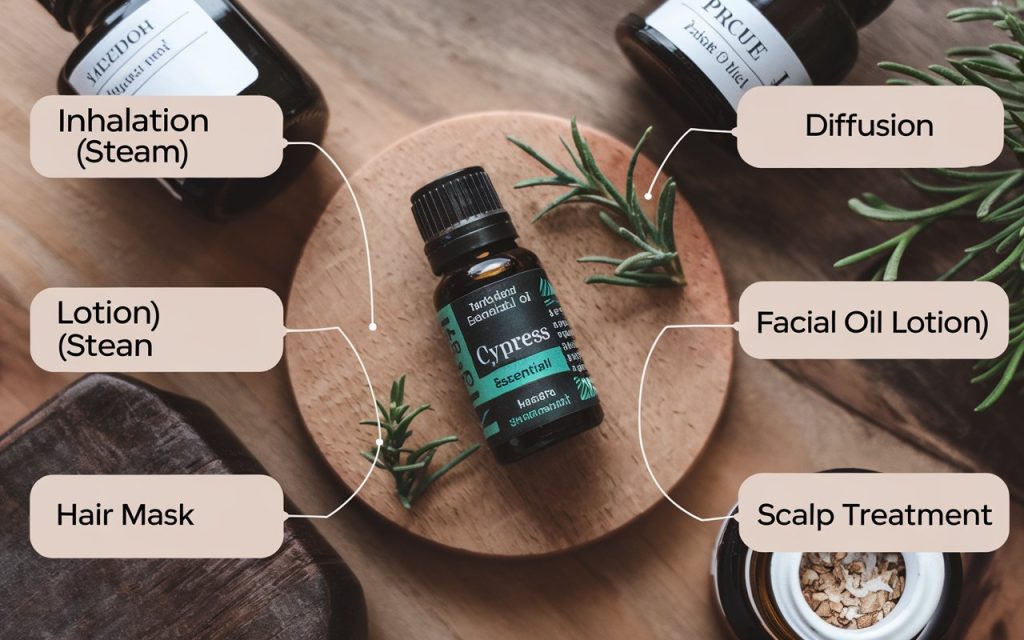
| Respiratory issues | Adults with colds, coughs, or bronchitis | During congestion, breathing difficulties | Inhalation (steam), Diffusion | Add 3-5 drops in a diffuser or to a bowl of hot water for steam inhalation. |
| Muscle pain/Arthritis | Adults with muscle soreness, cramps, or arthritis | After physical activity or when in pain | Topical (massage oil), Bath soak | Dilute 5-10 drops in 1 tbsp of carrier oil and massage into the affected area. |
| Oily skin/Acne | Individuals with oily or acne-prone skin | As part of a daily skincare routine | Topical (facial oil, lotion) | Add 2-3 drops to 1 tbsp of carrier oil or moisturizer. Apply to the face once daily. |
| Varicose veins/Hemorrhoids | People experiencing poor circulation or varicose veins | When needed for swelling or discomfort | Topical (massage oil) | Dilute 5 drops in 1 tbsp of carrier oil and gently massage over the affected area. |
| Stress and Anxiety Relief | Adults experiencing stress or emotional turbulence | During meditation or relaxation periods | Aromatherapy (Diffusion, Inhalation) | Use 3-5 drops in a diffuser, or inhale directly from the bottle for quick relief. |
| Hair care | Adults with dry or unhealthy hair | During hair care routine | Hair mask, Scalp treatment | Mix 2-3 drops in 1 tbsp of carrier oil, massage into the scalp, and leave for 20 minutes before washing out. |
| Wound healing/Minor cuts | Adults with small wounds, cuts, or skin irritations | Immediately after injury or irritation | Topical (ointment) | Mix 1-2 drops with a carrier oil and apply to the affected area 1-2 times daily. |
| Emotional Balance | People going through grief or emotional distress | During meditation or emotional turmoil | Aromatherapy (Diffusion) | Use 3-5 drops in a diffuser to create a calming atmosphere. |
Who Should Not Use Cypress Essential Oil?
- Pregnant and breastfeeding women: Cypress oil may not be safe during pregnancy or breastfeeding, as it can cause uterine contractions or other complications.
- Children under 2 years old: Due to the strength of the oil, it is not recommended for young children.
- People with sensitive skin: Cypress oil may cause irritation or an allergic reaction if applied without proper dilution.
- Individuals with epilepsy: As with many essential oils, people with epilepsy should consult a healthcare provider before use.
- Those with low blood pressure: Cypress essential oil can lower blood pressure further, which may be dangerous for those with hypotension.
Always consult a healthcare professional before starting any essential oil regimen, particularly if you have underlying health conditions.
Cypress Essential Oil Against Hair Growth
Cypress oil is often used in hair care to stimulate hair follicles, improve scalp circulation, and promote overall hair health. Contrary to myths, it does not inhibit hair growth but instead supports healthy hair by preventing scalp infections. The oil’s antimicrobial properties make it a good choice for maintaining a healthy scalp.
Spiritually, cypress essential oil has been valued for centuries, especially in meditation and grounding practices. It is associated with emotional balance and is often used to promote calm and transformation during times of grief or change. Its soothing aroma deepens meditation and helps release negative energy, making it ideal for spiritual growth and focus.
Cypress Essential Oil Benefits for Skin
For the skin, cypress oil is a natural ally. Its astringent properties help tighten pores, reduce excess oil, and improve skin texture. It’s also effective in managing acne due to its ability to combat bacteria. Inflammatory skin conditions such as eczema and redness can also be soothed by cypress oil, thanks to its anti-inflammatory effects. Always dilute cypress oil with a carrier oil before applying it to the skin to prevent irritation.
- Tightens and tones skin: Its astringent properties help tighten pores, reduce the appearance of oily skin, and improve skin texture .
- Reduces blemishes and acne: Due to its antimicrobial nature, cypress oil can help fight bacteria and reduce breakouts.
- Soothes irritated skin: Cypress oil’s anti-inflammatory properties make it useful for calming redness, eczema, and other inflammatory skin conditions.
Cypress Essential Oil Uses
In terms of everyday uses, cypress essential oil can be diffused for emotional balance or respiratory support, applied topically (with a carrier oil) to relieve muscle soreness, or added to bath water for relaxation. It’s also commonly used in skincare products for its ability to control oil and tone the skin.
Cypress Essential Oil Substitute
If you don’t have cypress essential oil, alternatives such as juniper berry, tea tree, or pine essential oil offer similar benefits. Juniper and pine share cypress’s fresh, woody scent and are useful for circulation and respiratory health, while tea tree is excellent for fighting bacteria and treating skin issues.
Cypress Essential Oil Blends Well With
Cypress essential oil blends beautifully with a variety of other essential oils. Some of the best combinations include:
- Lavender: For relaxation and skin health.
- Lemon: For an uplifting and refreshing blend.
- Sandalwood: For a deep, grounding scent in meditation.
- Bergamot: For a bright, calming blend that reduces stress.
Blending cypress oil with other oils allows you to customize the scent and benefits to suit your needs.
Cypress oil blends well with a variety of other essential oils, which can enhance its benefits and aroma. Lavender is a perfect companion for relaxation and skin health, while lemon and bergamot provide an uplifting and refreshing blend. For grounding meditation, blending cypress with sandalwood creates a calming and focused experience.
The aroma of cypress essential oil is fresh, woody, and slightly earthy, often described as reminiscent of evergreen trees. Its scent is clean and grounding, making it a popular choice in diffusers for a refreshing yet calming atmosphere.
Cypress Essential Oil Emotional Benefits
Emotionally, cypress oil is incredibly beneficial. Its grounding effect helps relieve stress, anxiety, and emotional tension. It supports emotional balance, especially during periods of grief or personal transition, making it a valuable tool in processing and letting go of negative emotions. It also promotes mental clarity, which is why it’s often used in meditative practices.
- Grounding and calming effects: It helps relieve stress, anxiety, and nervous tension.
- Emotional balance: Cypress oil can aid in processing grief, helping people move through challenging transitions.
- Mental clarity: Its refreshing scent promotes focus and concentration, making it useful during meditation or mindfulness exercises .
Medicinal Uses of Cypress Essential Oil (Cupressus sempervirens)
Cypress essential oil is widely recognized for its medicinal and therapeutic benefits.
Internally, it has been traditionally used to treat conditions like whooping cough, persistent spasmodic coughs, colds, flu, and sore throats. It also helps manage the spitting up of blood due to its natural properties.
Externally, it’s applied as a lotion to tighten blood vessels, which is particularly helpful for those suffering from varicose veins and hemorrhoids.
Cypress oil’s antiseptic properties are beneficial for healing wounds and treating excessive sweating, especially in the feet. Its ability to promote circulation makes it valuable for managing venous issues, and it has diuretic effects that support kidney and bladder health, aiding in conditions like urinary incontinence and bladder tone improvement.
Cypress essential oil also offers psychological benefits. It induces feelings of relaxation and mild sedation, which helps reduce stress, anxiety, and even depression. Its calming properties make it a natural choice for emotional balance and improved mental well-being. In personal care, it is used in deodorants, cosmetics, and soap-making due to its fresh and clean scent, as well as its antibacterial properties.
Pharmacological Action
Cypress essential oil shows moderate antioxidant activity, especially in tests evaluating lipid peroxidation inhibition. In a study using multiple antioxidant assays, the oil demonstrated a 60% inhibitory effect on lipid peroxidation, which helps protect cells from oxidative damage. Though its effect in some antioxidant tests was mild, its role in protecting cell membranes against oxidative stress is significant.
The oil also displays antiproliferative activity against various cancer cell lines. Research on its effects against human cancer cells, including leukemia and melanoma, shows that Cypress essential oil reduces cell viability, particularly at higher concentrations. Studies demonstrated potent cytotoxic effects on cancer cell lines, with LC50 values indicating its higher anticancer activity against certain cell types, such as NB4 leukemia cells. These findings highlight the oil’s potential as a complementary therapy in cancer treatment, though more research is needed to confirm its efficacy and safety for widespread use.
Neurobiological Activity
Cypress essential oil contains α-pinene, its major active component, which has been shown to inhibit cholinesterase, an enzyme that breaks down neurotransmitters like acetylcholine. In studies, α-pinene’s cholinesterase inhibitory activity was linked to improved cognitive function and memory, suggesting potential benefits for neurodegenerative diseases like Alzheimer’s. The acetone and dichloromethane extracts of Cypress were particularly active in these assays, highlighting their potential for therapeutic use in neurological conditions.
Insecticidal Activity
Cypress essential oil has also shown promising insecticidal properties, particularly against the codling moth (Cydia pomonella), a common pest of apples and other fruits. The oil’s natural chemistry acts as a deterrent and repellent, making it a natural alternative to synthetic insecticides for pest control in agriculture.
Antimicrobial Activity
The antimicrobial properties of Cypress essential oil are largely due to its major constituents, including α-pinene, β-phellandrene, α-Terpinyl acetate, and cedrol. These compounds are known for their ability to inhibit the growth of various bacteria and fungi, making Cypress oil a useful natural antimicrobial agent. This makes it particularly valuable for treating infections and for use in food preservation, where it can serve as a natural alternative to synthetic preservatives. By reducing reliance on chemical preservatives, Cypress essential oil contributes to a more natural approach to food safety and human health.
Is Cypress Essential Oil Safe for Skin?
When applied to the skin, cypress essential oil is generally safe, provided it’s properly diluted with a carrier oil. This reduces the risk of skin irritation, and a patch test is always recommended, particularly for those with sensitive skin.
What Does Cypress Smell Like?
The scent of cypress is clean, slightly woody, and fresh, with a hint of pine. It is neither overwhelming nor too subtle, striking a balance that works well in various settings, from personal care products to home diffusers.
Is Cypress Essential Oil Safe for Dogs?
When it comes to pets, particularly dogs, cypress essential oil can be used with caution. Dogs have a more sensitive sense of smell, so it’s important to dilute the oil heavily and avoid direct application to their skin or fur. If diffusing, make sure your dog has access to fresh air or a place to retreat if the scent becomes too intense. Always consult a veterinarian before using any essential oil around pets.
Cypress essential oil can be safe for dogs when used appropriately, but caution is required. Avoid applying it directly to their skin or allowing them to ingest it.
In conclusion
Cypress essential oil is a versatile and effective remedy for physical, emotional, and spiritual health. Whether you’re using it for skincare, respiratory support, or emotional balance, cypress oil can elevate your wellness routine. Ensure proper dilution and mindful use to enjoy its full range of benefits safely, especially when using it on the skin or around pets.
The medicinal properties of Cypress essential oil are diverse, ranging from treating respiratory and circulatory issues to offering antimicrobial and anticancer benefits. It also has promising applications in neurobiology, insect control, and natural skincare. However, it’s important to use the oil properly and consult a healthcare provider before integrating it into medical treatments, especially for serious conditions.