Alcohol is one of the most widely used substances in the world, and its effects reach far beyond a next-day headache. From the first sip, it changes how the brain and body function, and with regular use, those changes can add up into long-term health risks. We`ve created a breakdown of what alcohol actually does to your body — the short-term effects, the long-term risks, and where moderation fits in.
What is Alcohol Doing in Your Body?
Alcohol is metabolised extremely quickly by your body.
Unlike foods, which require time for digestion, alcohol needs no digestion and so is more quickly absorbed and metabolised than other nutrients. About 20% is absorbed directly across the walls of an empty stomach and can reach the brain within one minute.
Once alcohol reaches the stomach, the enzyme “alcohol dehydrogenase” begins to break it down, reducing the amount of alcohol entering the blood by approximately 20%.
Women produce less of this enzyme, which partially explains why women are more quickly affected by alcohol than men.
About 10% of the alcohol is expelled in the breath and urine.
Alcohol is rapidly absorbed in the upper portion of the small intestine.
The alcohol-laden blood then travels to the liver affecting nearly every liver cell. The liver cells are the only cells in your body that can produce enough of the enzyme alcohol dehydrogenase to metabolise alcohol, at the rate of about ½ ounce of ethanol per hour.
That is approximately one drink, depending on a person’s body size, food intake, etc.
If more alcohol arrives in the liver than the enzymes can process, the excess alcohol travels to all parts of the body, circulating until the liver enzymes are finally able to process it.
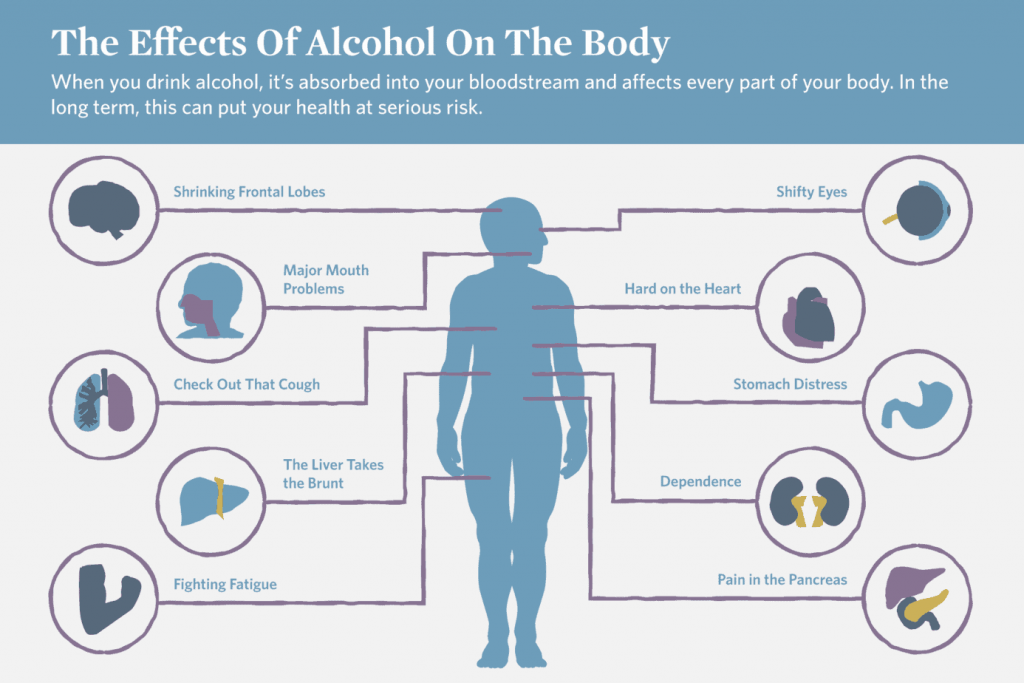
Although alcohol affects every organ in your body, it’s most dramatic impact is upon the liver.
The liver cells normally prefer to use fatty acids as fuel, excess fatty acids being sent to other body tissues in the form of triglycerides.
However, when alcohol is present, the liver cells are forced to first metabolize the alcohol, letting the fatty acids accumulate, sometimes in huge amounts. Alcohol metabolism permanently changes liver cell structure, which impairs the liver’s ability to metabolize fats. This is why heavy drinkers tend to develop fatty livers.
The breakdown of alcohol by the liver requires high levels of the B vitamin niacin, which can lead to other vital body processes being deprived. In turn, this can lead to an acid state in the body and fat beginning to clog the liver. An accumulation of fat in the liver can be observed after only a single night of heavy drinking.
If you keep to the recommended guidelines and drink slowly through the evening, your liver copes reasonably well. However, heavy drinking overtaxes the liver with serious consequences. A liver clogged with fat causes liver cells to become less efficient at performing their necessary tasks, which in turn affects your overall health. A fatty liver is the first stage of liver deterioration in heavy drinkers, and interferes with the distribution of oxygen and nutrients to the liver’s cells. If the condition persists long enough, the liver cells will die, forming fibrous scar tissue (the second stage of liver deterioration, or fibrosis). Some liver cells can regenerate with good nutrition and abstinence, however in the last stage of deterioration, or cirrhosis, the damage to the liver cells is the least reversible.
Rates of liver disease are falling in the rest of Europe, but are rising in the UK. Liver disease has traditionally affected drinkers in middle age, but now sufferers are getting younger. Up to one in three of the adult population is drinking enough alcohol to create a risk of developing alcohol-related liver disease.
If you are a moderate drinker, alcohol may actually increase your appetite, causing you to eat more than you really need and therefore gain weight. Heavy, persistent alcohol consumption appears to have the opposite effect. Alcohol causes euphoria, which depresses the appetite, so that heavy drinkers tend to eat poorly and become malnourished.
Alcohol is very rich in energy, at 7 calories per gram, but these are “empty calories” like sugar and fat, containing no nutrients that actually nourish the body. The more heavily you drink, the less likely it is that you will eat enough food to obtain adequate nutrients. Chronic alcohol abuse also interferes with the body’s metabolism of nutrients, leading to damage of the liver, digestive system, and nearly every bodily organ.
The short term health risks of alcohol include:
- Anxiety
- Depression
- Skin problems
- Sexual difficulties such as impotence
- Impaired judgement leading to accidents and injuries
- Slowed breathing and heartbeat
- Loss of consciousness
- Suffocation through choking on your own vomit (aspiration)
- Potentially fatal poisoning
Regularly drinking more than the recommended number of units over a long period can lead to complications like:
- Certain types of cancer, especially breast cancer
- Memory loss, brain damage, stroke or dementia
- Increased risk of heart disease and stroke
- Liver disease, such as cirrhosis and liver cancer
- Stomach damage
- Potentially fatal alcohol poisoning
- Damage to an unborn child
- Male and female infertility
- Increased risk of miscarriage
- Osteoporosis
- Pancreatitis
- Stomach ulcers
- Heart disease
- Raised blood pressure
- Obesity
Weekly drinking guidelines by group
Public health agencies define “safe” as lower-risk, not risk-free — even within these limits, alcohol still affects health. Guidelines also vary by country, so figures below reflect the most commonly cited US and UK standards.
| Group | Daily limit | Weekly limit | Notes |
|---|---|---|---|
| Women | Up to 1 standard drink | Up to 7 standard drinks | Women metabolize alcohol more slowly on average, due to lower body water content and different enzyme levels. |
| Men | Up to 2 standard drinks | Up to 14 standard drinks | Higher average body mass and water content allow for faster dilution of alcohol in the bloodstream. |
| Lower body weight (under ~65 kg / 145 lb) | Below standard daily limit | Below standard weekly limit | Alcohol concentrates more in less body mass, so the same drink raises blood alcohol content higher and faster. |
| Higher body weight (over ~90 kg / 200 lb) | At or near standard daily limit | At or near standard weekly limit | More body mass dilutes alcohol somewhat, but this does not cancel out liver or long-term health risks. |
*A “standard drink” is typically defined as 14 grams (about 0.6 fl oz) of pure alcohol — roughly a 12 oz beer, a 5 oz glass of wine, or a 1.5 oz shot of spirits.
A standard drink works out to about 14 grams / 17.7 ml of pure alcohol, but the beverage volume depends on what you’re drinking, since different drinks have different alcohol strength:
- Beer (~5% ABV): 355 ml (about 12 fl oz)
- Wine (~12% ABV): 148 ml (about 5 fl oz)
- Spirits (~40% ABV): 44 ml (about 1.5 fl oz shot)
So “up to 1 standard drink” means one of those amounts — not one of each. A pint of beer (568 ml) or a large wine pour (250 ml) actually counts as more than one standard drink.
These figures are general population guidelines, not individual medical advice: factors like liver health, medications, pregnancy, and family history can lower a safe threshold well below these numbers. Anyone with health concerns about their own drinking should check with a doctor rather than rely on a general table.
Drinking alcohol can increase your risk of:
- Mouth cancer
- Pharyngeal cancer (upper throat)
- Oesophageal cancer (food pipe)
- Laryngeal cancer (voice box)
- Breast cancer
- Bowel cancer
- Liver cancer
Every year, alcohol causes about 6% of cancer deaths in the UK, killing over 9,000 people.
Along with smoking, alcohol causes the vast majority of mouth and food pipe cancers. In the last decade, mouth cancer has become much more common and this may be because of higher levels of drinking.
Alcohol is second only to smoking as a risk factor for oral and digestive tract cancers.
This may be because alcohol breaks down into a substance called acetaldehyde, which can bind to proteins in the mouth. This can trigger an inflammatory response from the body, the most severe of which is the development of cancerous cells.
Most people who suffer from health problems because of their drinking are not alcoholics, but rather are those who drink heavily over a number of years. Many suffer few immediate consequences of their drinking, but cumulatively it takes its toll.
6,000 deaths from coronary heart disease in men each year are directly due to alcohol. And 400 of the 1,700 deaths from mouth cancer per year are linked to heavy drinking – that’s nearly one in four.
Because of the effects of alcohol on the brain, it is frequently associated with mental health problems such as depression, anxiety, self-harm and also suicide. In extreme cases (defined as drinking more than 30 units per day for several weeks) it can occasionally cause ‘psychosis’, a severe mental illness where hallucinations and delusions of persecution develop. Psychotic symptoms can also occur when very heavy drinkers suddenly stop drinking and develop a condition known as ‘delirium tremens’.
Heavy drinkers who drink daily, can experience withdrawal symptoms such as nervousness, tremors, palpitations, severe anxiety, and even phobias, such as a fear of going out.
Alcohol abuse over the long term has been shown in many brain imaging studies to actually, physically shrink the region of the brain that commands learning and memory. The shrinkage is more extensive in the cortex of the frontal lobe, which is known to be the center of higher intellectual functions, and of course this shrinkage will increase with continued alcohol use and age. Short-term memory loss is usually the first noticeable sign of alcohol related damage.
Progressive brain shrinkage was shown in a study that conducted periodic imaging in alcoholics over a five year period. The amount of brain shrinkage was directly related to the amount of alcohol consumed, but there was no question that the shrinkage far exceeded anything in the normal range.
Until around age 18 -19 the human brain is still in the process of development and may be more susceptible to damage than the adult brain. In adolescents who regularly drink alcohol, parts of the brain which are important in planning and emotional control have been found to be smaller than expected.
If you have been prescribed antidepressants, sedatives, analgesics or drugs for epilepsy you should avoid alcohol.
The health effects of alcohol are summarised in this table
| Arthritis | Increases risk of gouty arthritis |
|---|---|
| Cancer | Increases the risk of cancer in the liver, pancreas, rectum, breast, mouth, pharynx, larynx and oesophagus |
| Foetal Alcohol Syndrome | Causes physical and behavioral abnormalities in the foetus |
| Heart Disease | Raises blood pressure, blood lipids and the risk of stroke and heart disease in heavy drinkers. Heart disease is generally lower in light to moderate drinkers. |
| Hyperglycermia | Raises blood glucose |
| Hypoglycemia | Lowers blood glucose, especially for people with diabetes |
| Kidney Disease | Enlarges the kidneys, alters hormone functions, and increases the risk of kidney failure |
| Liver Disease | Causes fatty liver, alcoholic hepatitis and cirrhosis |
| Malnutrition | Increases the risk of protein-energy malnutrition, low intakes of protein, calcium, iron, vitamin A, vitamin C, thiamine, vitamin B6 and riboflavin, and impaired absorption of calcium, phosphorus, vitamin D and zinc. |
| Nervous Disorders | Causes neuropathy and dementia; impairs balance and memory |
| Obesity | Increases energy & calorific intake |
| Psychological disturbances | Causes depression, anxiety and insomnia |
| Infertility | In men, it damages the sperm and in women compromises health of the egg. |
FAQ
How alcohol affects your body and your health
Alcohol reaches nearly every organ system once it enters the bloodstream, and its effects build up the longer and more heavily someone drinks.
- Brain: slows communication between neurons, impairing judgment, coordination, and memory; long-term heavy use can shrink brain tissue and affect cognitive function.
- Liver: does most of the work breaking alcohol down, which over time can lead to fatty liver, inflammation, and eventually cirrhosis.
- Heart: heavy or long-term drinking raises blood pressure and can weaken the heart muscle, while irregular drinking patterns increase the risk of arrhythmia.
- Digestive system: irritates the stomach lining, disrupts nutrient absorption, and raises the risk of acid reflux and pancreatitis.
- Immune system: regular drinking weakens the body’s ability to fight off infection, making illnesses more frequent and harder to recover from.
- Hormones and reproductive health: disrupts hormone regulation in both men and women, affecting fertility and menstrual cycles.
- Mental health: while it may feel relaxing in the moment, alcohol is a depressant, and regular use is linked to higher rates of anxiety and depression over time.
- Sleep quality: interferes with deep sleep cycles, so even a full night’s sleep after drinking tends to feel less restorative.
- Cancer risk: classified as a group 1 carcinogen, alcohol is linked to increased risk of several cancers, including breast, liver, and esophageal cancer.
The severity of these effects depends on how much and how often someone drinks, along with individual factors like genetics, body weight, and overall health. Cutting back — even without quitting entirely — tends to lower these risks measurably, which is why most health guidelines now frame moderation, not just avoidance of heavy drinking, as the safer target.
How does drinking alcohol affect your health?
Alcohol affects nearly every system in the body because it’s processed by the liver and travels through the bloodstream to the brain, heart, and digestive organs. In the short term, it slows brain activity, impairs coordination and judgment, and disrupts sleep quality even after the effects wear off. Over time, regular drinking raises the risk of liver disease, high blood pressure, several cancers, and mental health conditions like depression and anxiety. The overall impact depends heavily on amount, frequency, genetics, and existing health conditions — there’s no single “safe” threshold that applies to everyone.
What are the 7 effects of alcohol?
- Impaired coordination: slower reflexes and unsteady movement
- Reduced inhibition: lowered judgment and risk-taking behavior
- Slurred speech: from alcohol’s effect on the brain and nervous system
- Memory gaps: short-term memory disruption, including blackouts at higher doses
- Mood changes: shifts between euphoria, irritability, or sadness
- Dehydration: alcohol suppresses a hormone that helps the body retain water
- Disrupted sleep: lighter, less restorative sleep even after falling asleep faster
What are 10 positive effects of alcohol?
Most claimed benefits apply only to light or moderate drinking, and recent research has walked back many earlier conclusions — several studies once cited for alcohol’s “heart benefits” have been found to have methodological flaws. With that caveat:
- Social bonding: shared drinking is a common social ritual across cultures
- Short-term relaxation: mild doses can ease tension and social anxiety
- Possible modest cardiovascular association: some observational studies link light drinking to marginally lower heart disease rates, though causation is disputed
- Antioxidants in some drinks: red wine contains resveratrol and other plant compounds, though the amounts are small
- Appetite stimulation: small amounts can increase appetite before a meal
- Reduced stress in the moment: a temporary calming effect on the nervous system
- Cultural and culinary value: wine and spirits pairing is central to many food traditions
- Sense of celebration: alcohol often marks milestones and social occasions
- Possible mild cognitive ease: some people report short-term stress relief that indirectly supports sleep onset
- Economic and cultural industries: winemaking, brewing, and distilling support tourism and local economies
Most health authorities are now cautious about presenting these as genuine health benefits, since even light drinking carries offsetting risks.
What are 10 harmful effects of alcohol on the body?
- Liver damage: fatty liver, hepatitis, and cirrhosis with regular heavy use
- Increased cancer risk: linked to cancers of the mouth, throat, esophagus, liver, breast, and colon
- High blood pressure: regular drinking raises cardiovascular strain over time
- Weakened immune system: makes the body more susceptible to infection
- Digestive problems: irritation of the stomach lining and increased acid reflux
- Brain changes: shrinkage of brain tissue and impaired memory with long-term heavy use
- Weight gain: alcohol is calorie-dense and can disrupt metabolism
- Hormonal disruption: affects reproductive hormones and fertility in both men and women
- Mental health decline: heavy use is linked to higher rates of depression and anxiety
- Dependence risk: regular use can lead to tolerance and physical dependence
Is 2 beers a day bad?
Two beers a day falls within what some guidelines call “moderate” drinking, but current health guidance is moving away from framing any regular amount as risk-free. In the US, moderate drinking is defined as up to two drinks a day for men and one for women, though newer research suggests even moderate, regular intake carries some increased cancer and cardiovascular risk over time. Whether two beers a day is “bad” for a given person depends on factors like body weight, liver health, medications, and family history — for anyone concerned about their own drinking pattern, a conversation with a doctor is the most reliable way to get a personalized answer.
To Sum it Up
There is no “safe amount of alcohol”.
However, the risks scale with how much and how often you drink — an occasional beer carries a very different profile than a daily habit.
Understanding what alcohol does to your body gives you the information to make that call for yourself, whether that means cutting back, setting limits, or simply being more mindful of the pattern you’re in.