
Asthma, a persistent respiratory condition that impacts individuals across all age groups, stems from airway inflammation and constriction, leading to increased breathing difficulty. Common symptoms encompass coughing, wheezing, breathlessness, and chest constriction, varying in intensity from mild to severe and exhibiting intermittent patterns over time.
Asthma: Types, Causes, Symptoms, Diagnosis & Treatment
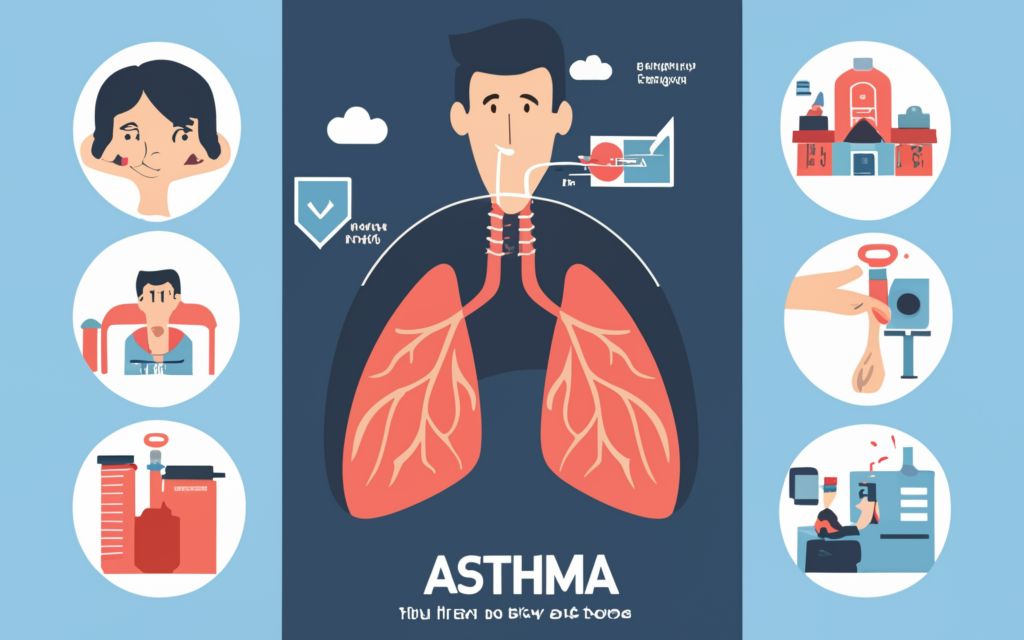
Asthma isn’t a single entity, but rather a group of chronic lung conditions that make breathing difficult. Understanding its unique aspects empowers you to manage it effectively:
Types of Asthma:
- Allergic asthma: Triggered by allergens like pollen, dust mites, or pet dander.
- Non-allergic asthma: Triggered by irritants like smoke, pollution, or cold air.
- Exercise-induced asthma: Symptoms worsen during physical activity.
- Occupational asthma: Triggered by workplace dust, fumes, or chemicals.
Asthma – Symptoms and Causes:
Common symptoms include:
- Wheezing (a whistling sound when breathing)
- Coughing, especially at night
- Chest tightness and shortness of breath
- Difficulty sleeping due to breathing problems
Causes vary, but often involve a combination of genetic and environmental factors, like:
- Genetics: Having a family history increases your risk.
- Allergies: Triggers inflammatory responses in the airways.
- Respiratory infections: Can contribute to developing or worsening asthma.
- Environmental factors: Air pollution, smoke, and dust can irritate airways.
Can you live normal with asthma?
Absolutely! With proper management, most people with asthma can live normal, active lives. Effective treatment plans help control symptoms and prevent attacks, allowing you to participate in all aspects of life.
Is asthma serious illness?
While not inherently life-threatening, uncontrolled asthma can lead to severe attacks impacting lung function and requiring emergency care. Early diagnosis and proper management are crucial to prevent complications.
Is it asthma or anxiety?
Both conditions can share similar symptoms like shortness of breath and chest tightness. However, anxiety typically involves other symptoms like racing thoughts, sweating, and panic attacks, while asthma symptoms are primarily respiratory-focused. Consulting a doctor for accurate diagnosis is crucial.
What is the best treatment for asthma?
There’s no single “best” treatment, as it depends on individual factors and asthma type. Common approaches include:
- Medications: Inhalers to quickly relieve symptoms and long-term controllers to prevent attacks.
- Allergy management: If allergies are triggers, avoiding them and taking antihistamines are crucial.
- Trigger avoidance: Identifying and reducing exposure to personal triggers.
- Lifestyle changes: Maintaining a healthy weight, exercising regularly, and managing stress can significantly improve asthma control.
Remember, asthma management is a collaborative effort. Working with your doctor to create a personalized plan empowers you to breathe easier and embrace an active, fulfilling life. Don’t hesitate to seek professional guidance – you’re not alone in this journey!